
Cómo el emoji se volvió un lenguaje: 25 años de comunicación visual
Hace 25 años, una red de buscapersonas japonés añadió 176 pequeños iconos a sus mensajes de texto. Esos iconos se convirtieron en la semilla de un lenguaje visual global. Así ocurrió, y así podrían ser los próximos 25 años.

Lois Chen·Investigadores de cultura emoji + redactores de guías por plataforma·22 de junio de 2026
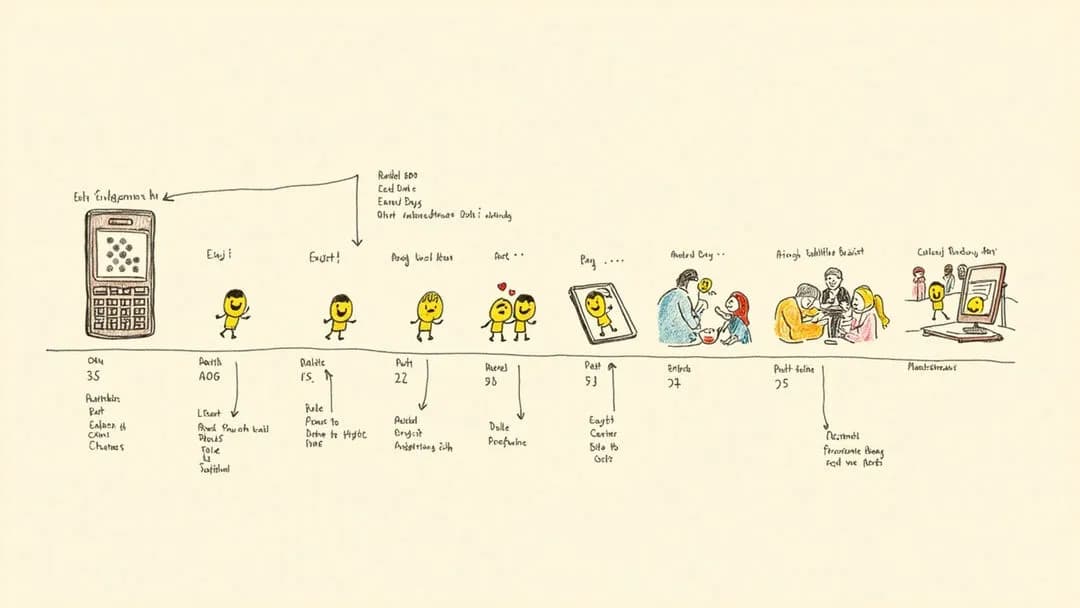
En 1999, un empleado de 25 años de NTT DoCoMo llamado Shigetaka Kurita recibió un encargo poco habitual. La empresa estaba preparando un nuevo buscapersonas con internet, y el equipo de marketing quería una forma de hacer que los mensajes se distinguieran del SMS exclusivamente textual que dominaba la época. Kurita propuso un conjunto de 176 pequeños iconos, dibujos de 12x12 píxeles que podían insertarse en los mensajes para transmitir ánimo, clima o intención sin tener que escribir. Los llamó emoji, una contracción del japonés «e» (imagen) y «moji» (carácter). El conjunto era tan pequeño que cabía en un solo disquete. Hasta donde se puede comprobar, es el primer conjunto de emoji entregado a consumidores.
Sería fácil sobredimensionar la importancia de esos 176 iconos. El conjunto de DoCoMo de 1999 no fue el primer intento de mensajería pictográfica: los Zapf dingbats se remontan a los años 70, y la operadora japonesa J-Phone había lanzado en 1997 un pequeño conjunto de 90 caras tipo emoji. Pero el conjunto que sobrevivió, se propagó y se convirtió en la base de lo que hoy llamamos un lenguaje visual global fue el de DoCoMo. La pregunta que vale la pena hacerse no es por qué ganó el emoji, sino por qué se mantuvo ganando 25 años seguidos.
El largo período plano de 12 años (1999-2011)
Durante casi toda la primera década de existencia del emoji, casi nadie fuera de Japón lo usaba. El conjunto de DoCoMo era exclusivo de la operadora: funcionaba en los teléfonos DoCoMo y no en ninguna otra red. SoftBank, KDDI y J-Phone tenían sus propios conjuntos competidores, y no existía un estándar. Los viajeros internacionales descubrían el emoji como una curiosidad y una molestia: un mensaje de texto lleno de pequeñas caras enviado por un colega japonés llegaba a un teléfono estadounidense convertido en una seguidilla de signos de interrogación.
El cambio que terminó con ese período plano fue Unicode 6.0, publicado en octubre de 2010, que codificó formalmente 722 emoji en el juego de caracteres universal (Universal Character Set). Esto significaba que los emoji podían viajar con el texto por cualquier plataforma que implementara el estándar. Apple fue la primera gran plataforma occidental en actuar: iOS 5 (octubre de 2011) llegó con un teclado de emoji integrado en el sistema, y de la noche a la mañana cada iPhone en Estados Unidos quedó habilitado para usar emoji. La penetración fue casi vertical. Seis meses después del lanzamiento de iOS 5, más del 50% de los usuarios estadounidenses de Twitter habían usado al menos un emoji en un tuit.
La explosión social (2011-2018)
Lo que pasó después no fue solo adopción: fue un cambio de fase. El emoji pasó de ser un conjunto de iconos a una capa del lenguaje. El emoji 😂 (Face with Tears of Joy) se convirtió en 2015 en el emoji más usado del mundo, y Oxford Dictionaries lo eligió como la palabra del año ese mismo año. Que un glifo tipográfico definido por el consorcio Unicode sea considerado la palabra más significativa de la lengua inglesa es la validación más espectacular que nadie ha producido de la tesis del «emoji como lenguaje».
Pero la historia más interesante es la que ocurrió en las plataformas que hicieron del emoji su modalidad principal de entrada. Snapchat, Instagram y TikTok no trataban el emoji como decoración; lo trataban como el sustrato de la comunicación. Una racha (streak) de Snapchat es un número que no significa nada sin el emoji de fuego al lado. Una bio de Instagram es más densa en emoji que en inglés. La UI de TikTok se construye con un vocabulario de menos de 100 emoji que funcionan como tics verbales de la plataforma. Hacia 2018, el adolescente medio en Estados Unidos enviaba al día más emoji que palabras completas en inglés, contadas por caracteres.
La gramática que surgió
Esta es la parte que la mayoría pasa por alto. El emoji no se volvió un lenguaje porque reemplazara palabras. Se volvió un lenguaje porque formó una gramática. Esa gramática tiene tres capas.
La primera es el apilamiento. Los usuarios descubrieron que dos o tres emoji colocados uno al lado del otro (🌸 + ✨ + 💕) podían significar algo que cada emoji por separado no significaba. La combinación no está en la especificación Unicode, pero sí en el lenguaje. Los lingüistas lo llaman composición fraseológica (phrasal composition), y es el mismo mecanismo que permite a los hispanohablantes construir frases nuevas a partir de palabras que ya existen.
La segunda son las secuencias con Zero-Width Joiner. Unicode introdujo el ZWJ (U+200D, Zero-Width Joiner, «unidor de ancho cero») como forma de enlazar varios emoji en un solo glifo. 👨👩👧👦 (el emoji de familia con dos padres y dos hijos) son en realidad cinco code points independientes unidos por ZWJ. Esto no es solo una curiosidad técnica: es una gramática generativa. Un hablante del lenguaje emoji puede construir una familia de cualquier composición tecleando los code points, aunque esa combinación nunca haya sido renderizada antes.
La tercera es la deriva semántica. 💀 (Skull, calavera) ya no significa muerte en la mayor parte del uso del emoji en inglés. Significa «me morí, fue tan gracioso». 😭 (Crying Face, cara llorando) ya no significa «estoy triste». Significa «me río tanto que estoy por llorar». El cambio es más rápido de lo que la especificación Unicode puede seguir: el nombre corto oficial del CLDR para 💀 es Skull, y el nombre oficial para 😭 es Loudly Crying Face, y ninguno refleja lo que el 90% de los usuarios quiere decir cuando los envía. Es el mismo tipo de deriva semántica que sufren todas las lenguas vivas. El emoji ya no es un icono: es una palabra.
Por qué algunos emoji se vuelven palabras y otros mueren
Hoy hay más de 3.700 emoji en la especificación Unicode, y la larga cola es brutal. La mayoría se envía menos de mil veces al año en el mundo. Un puñado (😂, ❤️, 🔥, 💀, 😭, 🥺, ✨, 💯, 😩) carga con el grueso del tráfico. La diferencia entre los sobrevivientes y las víctimas no es estética. Es lingüística.
Los emoji que se vuelven palabras tienen cuatro propiedades. Son identificables: el concepto que codifican es algo que mucha gente siente. Son versátiles: pueden usarse en muchos contextos distintos. Son lo bastante ambiguos como para absorber varios significados, pero no tan ambiguos como para perder especificidad. Y son visualmente lo bastante simples como para leerse a 22 px (el tamaño al que se renderiza la mayoría de emoji en los chats).
🫠 (Melting Face, cara derritiéndose) es un buen caso de estudio. Salió en 2021. Sobrevivió porque codifica un estado emocional real (abrumado, agotado, derritiéndose bajo la presión) que ningún otro emoji cubría. No logró entrar en el top 10 porque el visual es más abstracto que 😩 o 💀, y la especificidad emocional lo hizo más difícil de usar en una gama amplia de contextos. A mediados de 2026, 🫠 se usa alrededor del 0,4% de las veces que 💀 en los tuits en inglés. La historia de por qué es la historia de por qué los emoji top son los emoji top.
Los próximos 25 años
Lo más importante que está ocurriendo ahora mismo en el mundo del emoji es la lenta toma de conciencia de que el conjunto cerrado de Unicode ya no es la única regla del juego. La IA generativa ya puede producir una imagen de calidad emoji en segundos, bajo demanda, que no existe en la especificación Unicode. El modelo de Forgemoji (elegir dos emoji y obtener un nuevo personaje ilustrado) es un ejemplo. Hay al menos una docena más (Apple Genmoji, los emoji personalizados de Google, Microsoft Designer, más una oleada de herramientas independientes) que hacen lo mismo de maneras diferentes.
Esto no es una amenaza para el conjunto Unicode de emoji. Los 200 emoji más usados seguirán siendo Unicode porque son la lingua franca: funcionan en cualquier plataforma, cualquier teclado, cualquier idioma. Pero la larga cola se va a trasladar a la generación con IA. Los próximos mil millones de usuarios no serán atendidos por un conjunto fijo de 3.700 emoji que tarda 18 meses por cada adición. Serán atendidos por un modelo capaz de producir cualquier emoji que puedan describir.
Dentro de 25 años, «emoji» seguirá significando el conjunto Unicode. Pero también significará un vasto espacio generativo de ilustraciones únicas, hechas a medida para un contexto, una marca, un concepto regional o un chiste privado. La gramática que Kurita empezó en 1999 va a seguir creciendo mucho después de que se apruebe el último conjunto fijo.
Forgemoji se construye sobre la premisa de que la larga cola ya está aquí. Elige dos emoji y mira lo que el modelo hace.
Probar el generador de emoji con IA →Fuentes
Fuentes
Source: Unicode Emoji y el futuro de la comunicación digital (retrospectiva de Kurita) — NTT DoCoMo (verificado en junio de 2026)
Source: Oxford Word of the Year 2015 , el emoji Face with Tears of Joy — Oxford University Press (verificado en junio de 2026)
Lois Chen·Editor de contenido
Revisado el 22 de junio de 2026
Cómo escribimos esto: Los artículos se escriben a partir de pruebas directas en plataformas (servidores de Discord, grupos de Telegram, TikTok), entrevistas con usuarios avanzados en r/discordapp y la comunidad de stickers de Telegram, y revisiones semanales de las release notes de Unicode. Cada guía es revisada por al menos un editor para validar su precisión técnica y se actualiza cuando la plataforma en cuestión cambia sus reglas. Los datos de uso de emojis se obtienen de Google Trends público, los informes UDF (frecuencia de emojis Unicode) y nuestros propios logs de generación de Forgemoji.
Fuentes: Equipo editorial interno de Forgemoji — consulta la página Sobre nosotros para las notas de cada colaborador