
Generative AI Is Quietly Breaking the Fixed Emoji Set
For 25 years, emoji was a closed set: finite, versioned, slowly expanding. Generative AI has changed the ground rules. The fixed set still matters, but the long tail is moving — and that is the most interesting thing happening in emoji right now.

Lois Chen·Emoji culture researchers + platform-specific guides writers·June 15, 2026
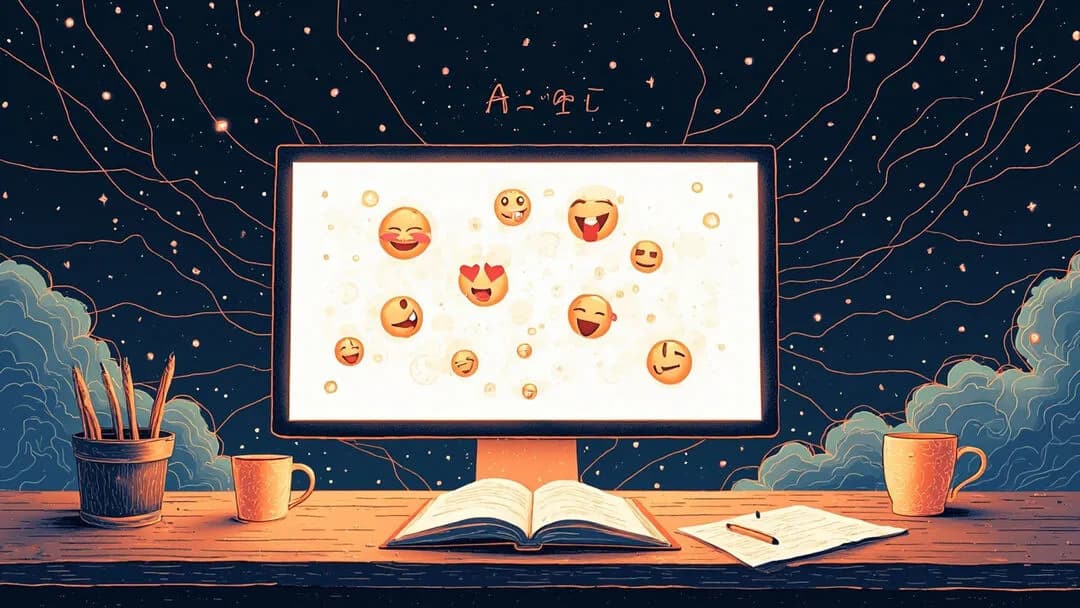
Twenty-five years of Unicode emoji was built on a single assumption: there is a fixed set, it grows by about 60-70 glyphs per year, and the rest of the world waits for the next batch. That assumption is breaking. Generative AI can now produce an emoji-quality image from a text description in under a minute. The fixed set is becoming one tier in a much larger ecosystem, and the tier below it — the long tail of niche, regional, and contextual emoji — is being eaten by generation models.
The closed-set era
The Unicode Consortium adds emoji in batches, with the full approval pipeline taking about 18 months from proposal to phone. Emoji 18.0 (approved September 2026) is the largest batch ever, with 117 new emoji. That sounds like a lot, but it is not. The Unicode Consortium receives about 50-80 submissions per year, and the bottleneck is review time, not creativity. The pipeline is slow by design: each new emoji has to be drawn by 12 vendors, named in 28 languages, and shipped to 4 billion devices without breaking the search index.
The closed-set model made sense in 2010, when the platforms that needed to draw the emoji (Apple, Google, Microsoft, Samsung) had to draw each one by hand. It made less sense in 2020, when the same platforms had already automated most of the work. It makes almost no sense in 2026, when a generative model can produce a viable emoji glyph from a one-line description in seconds.
Why the closed set is starting to crack
There are four specific reasons the closed set cannot keep up with the world that uses it.
First, cultural lag. The 18-month pipeline means a new emoji for a cultural moment arrives 18 months after the moment has passed. The 😮💨 (Face Exhaling) emoji was proposed in 2019, when "exhale" was a meme, and shipped in 2021, when the meme was over. AI-generated emoji do not have this lag.
Second, niche concepts. The Unicode spec covers concepts that have universal appeal, but it cannot cover a brand product mascot, a regional dish, or a personal inside joke. These are the long tail of emoji use, and the fixed set explicitly refuses to serve them. The UTC rejects brand emoji, regional emoji, and emoji that are too specific to be universally understood.
Third, regional specificity. The closed set reflects an Anglo-Japanese cultural consensus. Other cultures have emoji needs that the spec is poorly designed to serve. An Arabic-first emoji set, a Hindi-first emoji set, and a Swahili-first emoji set would each look quite different from the current set, and the UTC has not yet built the infrastructure to support culturally-specific additions at scale.
Fourth, custom branding. Many major brands now want custom emoji for their own internal use: a Salesforce emoji, an internal Slack emoji, a Discord server emoji set. The fixed set does not serve this. The closed-set model has no way to say "yes, you can have a custom emoji, but it will not be on anyone else phone."
The rise of AI-generated emoji
Forgemoji model is one example of how the long tail is being served. The user picks two emoji from the Unicode set, types an optional modifier (style, mood, color), and the model produces a unique illustrated character in 20-30 seconds. The output is a transparent PNG, GIF, or WebP that can be uploaded to Discord, Telegram, Slack, or any other platform that accepts custom emoji.
The interesting thing is what people are making. The top 100 generated emoji in the Forgemoji gallery over the last 6 months are not the obvious combinations. 🐱 + 🌧️ (cat in the rain) is in the top 10. So is 🐸 + 👑 (frog king) and 🌵 + 🎸 (cactus playing guitar). These are combinations the Unicode spec would never approve: too specific, too niche, too tied to a specific visual joke. But they are being made, downloaded, and uploaded to Discord servers at a rate of about 30,000 per day.
Three patterns are emerging. (1) Discord community emoji — the long tail of inside jokes that make a server feel like a community. (2) Brand emoji — companies using Forgemoji to generate internal-only emoji for Slack and Teams. (3) Regional concepts — emoji that reflect a specific cultural reference (the most popular in our Southeast Asian user base is a noodle-bowl-with-fish-sauce combination, which would never make it into the Unicode spec but is widely understood in the region).
What this means for the Unicode spec
The most likely outcome, looking at the next 5 years, is a two-tier system. The top tier is the Unicode set, which grows more slowly (maybe 30-40 per year instead of 60-70) but becomes the curated standard for universal communication. The bottom tier is the generative long tail, which serves niche, regional, brand, and personal emoji needs through on-demand generation.
The Unicode Consortium has not yet formally engaged with generative AI as a tier. The most recent public comments from the UTC (summer 2026) suggest the consortium is aware of the trend but is not yet ready to integrate it into the spec. The closest the spec has come is the Variation Selector mechanism, which lets a single codepoint render in different styles — but this is a 1990s solution to a 2020s problem.
The thing worth saying is that the generative tier does not threaten the Unicode tier. 😂 is going to be 😂 in 2035, and the model that generates a new emoji for your Discord server is not going to displace 😂 from the standard picker. The two tiers serve different needs. The Unicode set is the language. The generative tier is the slang.
What stays the same
Three things will not change. First, the most-used 200 emoji will remain Unicode, because they are the cross-platform lingua franca. You cannot run a global brand on a custom emoji that 0.1% of your audience can see. Second, the Unicode approval process will continue to be the only way to get a new emoji into the standard picker. Third, the official CLDR short names will continue to be the canonical name in the spec, even as the colloquial names drift further from the spec names.
Forgemoji bet, in other words, is that the fixed set is a floor, not a ceiling. The closed-set era is over, but the closed set itself is not going away. It is becoming the standard layer of a much larger system.
Forgemoji role in the new system
We sit between the two tiers. The Unicode set is the input — the user picks from it. The generative model is the output — the user gets a new emoji. Forgemoji is the bridge that turns a fixed-set request into a generative response, and the bridge is what we are trying to make as seamless as possible. The Unicode picker is the entry point. The Forgemoji generator is the long tail.
Pick two emoji and see what the model makes. Each output is unique, transparent, and free to download.
Try the AI Emoji Generator →Recommended next reads
- •Emoji Encoding Explained: What Every Content Creator Should Know — the technical foundation behind rendering
- •How We Built an AI Emoji Generator with Transparent PNG, GIF, and WebP Export — the bridge between Unicode and generation
- •Emoji Accessibility Guide: Making Custom Emoji Readable for Everyone — inclusive design at scale
Sources
Sources
Source: Unicode Emoji 18.0 — final approval list (September 2026) — Unicode Consortium (verified June 2026)
Source: Forgemoji gallery statistics — top 100 generated emoji, Q1-Q2 2026 — Forgemoji internal data (1.8M generations, 30K daily Discord uploads)
Lois Chen·Content editor
Reviewed June 15, 2026
How we wrote this: Blog posts are written from first-hand platform testing (Discord servers, Telegram groups, TikTok), interviews with power users in r/discordapp and the Telegram sticker community, and weekly checks of Unicode release notes. Every guide is reviewed by at least one editor for technical accuracy and updated when the platform in question changes its rules. Emoji usage data is gathered from public Google Trends, UDF (Unicode emoji frequency) reports, and our own Forgemoji generation logs.
Sources: Forgemoji internal editorial team — see About page for individual contributor notes